Demos
Filter by theory and by how the object is described.
Newtonian mechanics and drag
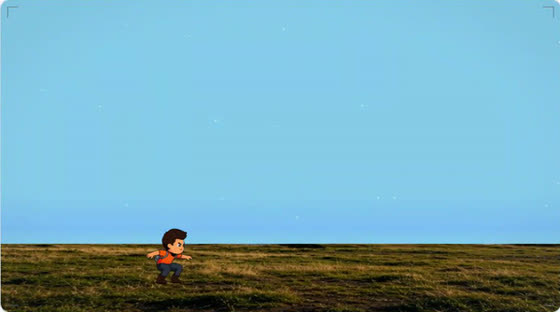
Planet jump
Same launch speed, different planets. Apex height is v₀²/2g, so g is the whole story.
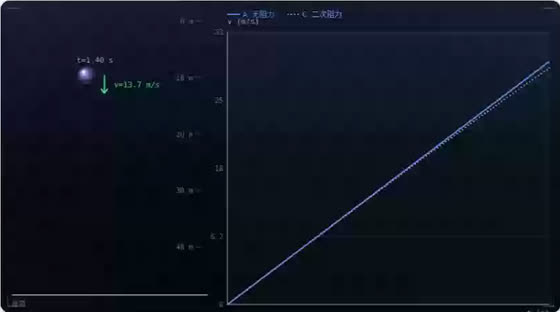
Falling ball · three models
Ignoring air resistance is an assumption. Compare vacuum, linear drag, and quadratic drag until they disagree.
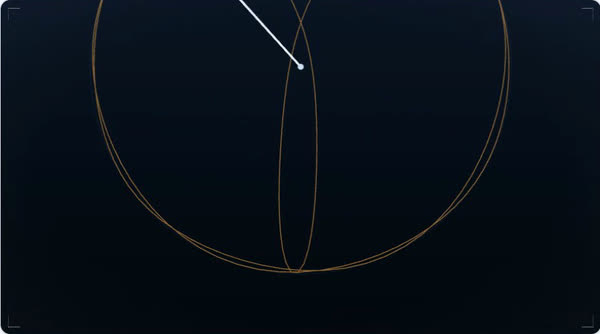
Double pendulum
A dozen pendulums released with initial angles 0.1° apart. Identical for two seconds, then completely different.
Waves and fluids
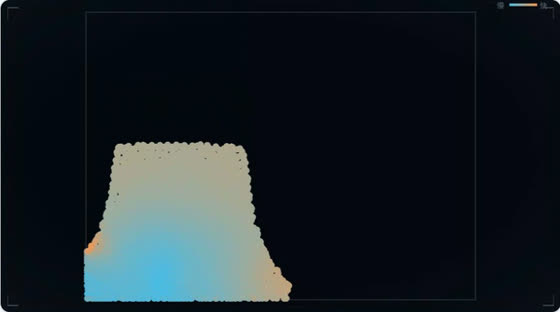
Gravity and orbits
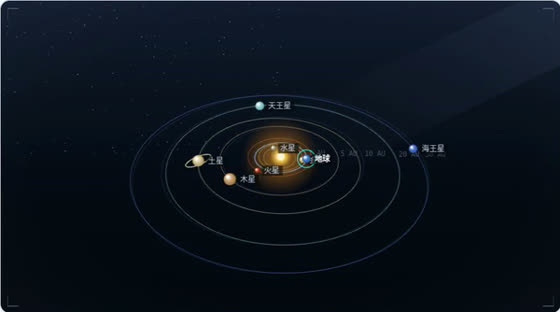
Planetary orbits
Eight planets from published Keplerian elements, with a, e, i, and vis-viva speed.
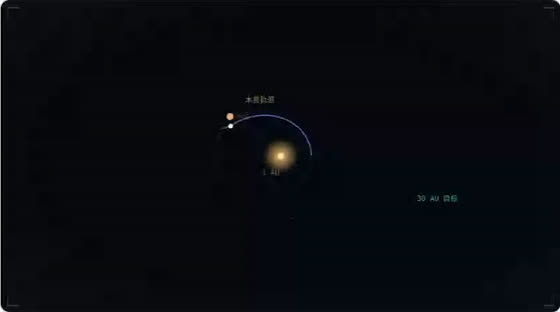
Gravity assist
A 12 km/s fuel budget. Passing behind Jupiter borrows about 10 km/s from the planet’s orbit.
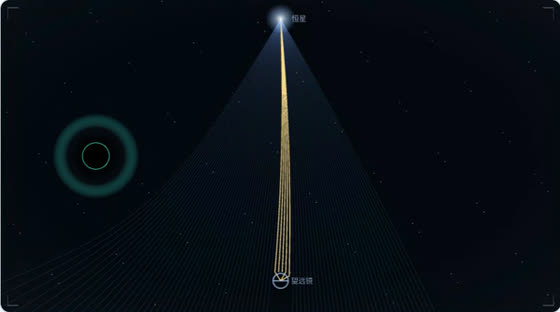
Gravitational lens
Drag an unseen mass until a background star bends into the telescope. Deflection is 4GM/(c²b).
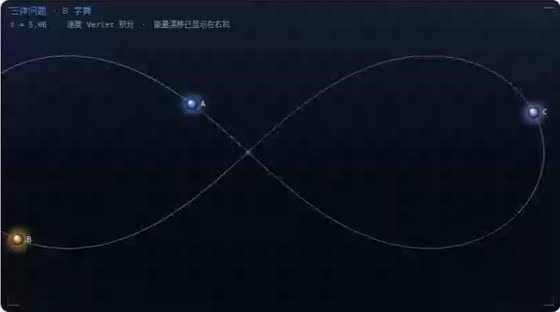
Three bodies and Lagrange points
A figure-eight periodic solution, then chaos after a nudge. In the rotating frame, L4 and L5 stay; L1, L2, and L3 do not.
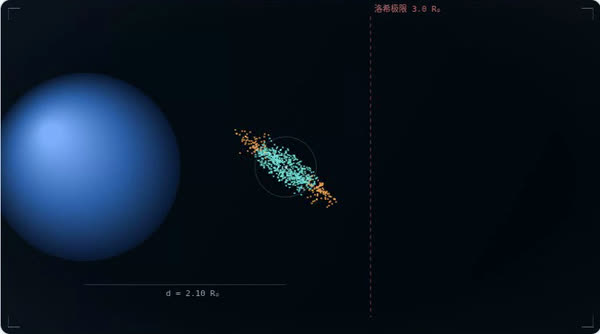
Roche limit
Push a moon toward its planet: first stretched into an ellipsoid, then torn into a ring. Ice moons break up farther out than rock.
Electrostatics and waves
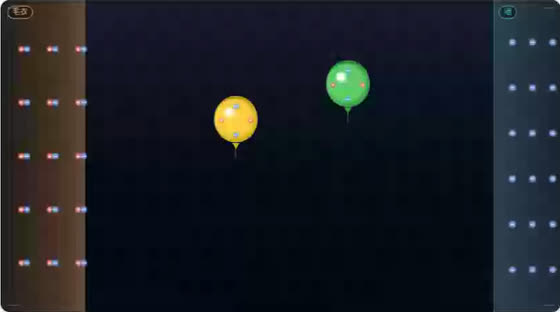
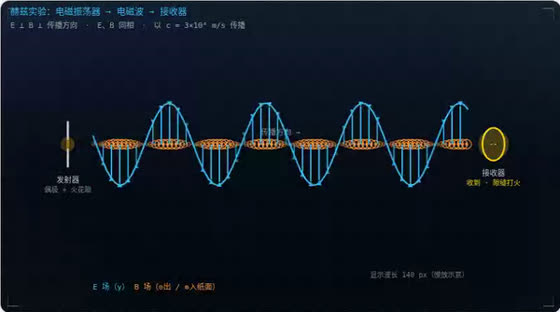
High speed
Many particles
Probability and measurement
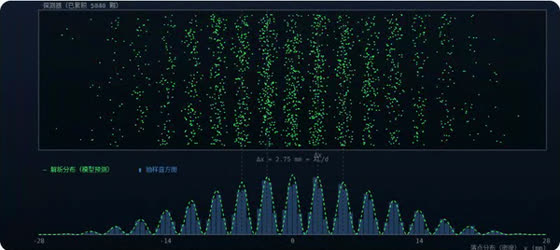
Double slit · one photon at a time
Single hits look random. The interference pattern appears only after many arrivals.
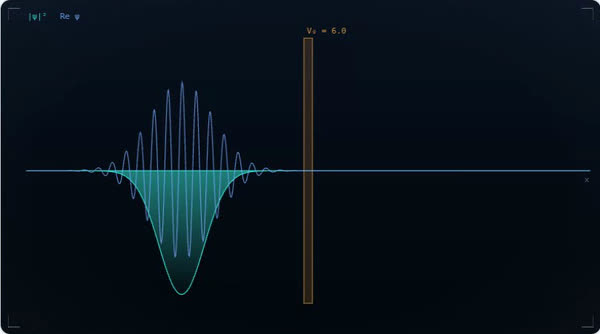
Quantum tunnelling
Not enough energy to cross? Part of the wave packet still does. Wider barriers cut the odds exponentially.
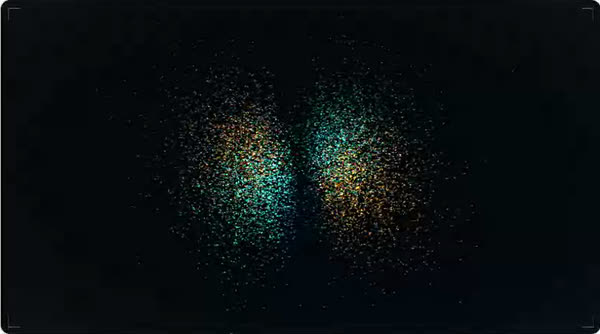
Hydrogen orbitals
No orbits, only |ψ|². Switch between 1s, 2p and 3d and rotate the cloud to count radial and angular nodes.